TL;DR
- Get good at snake drafting by picking characters that work well together. Save your best racers for the final rounds where the points count the most.
- Use smart combinations of character abilities to gain the upper hand. Pair Giant Baby with M.O.U.T.H. or Scoocher with Gunk to create tough challenges that others can’t handle.
- Change your approach based on the board. The Mild Mile rewards steady character skills, but Wild Wilds needs you to pay attention to trip spaces and bonus tokens.
- Keep track of the characters your opponents have left as the game goes on. This helps you guess their picks and plan how to counter them in the last races.
- Learn when effects resolve: Track spaces activate first. After that, the current player’s abilities go off. other racers activate their abilities in clockwise order. Knowing this timing lets you set off strong chain reactions.
Winning in Magical Athlete doesn't rely on rolling sixes. To win, players must draft , activate abilities at the right moments, and study the board to outsmart opponents during all four races.

Think Magical Athlete is just another luck-based game? Think again.
The rules of Magical Athlete appear simple. You roll a die, move your piece, and race to the end. But winning takes careful planning. You pick from 35 characters, and with games lasting about 35 minutes, every move counts.
Playing Magical Athlete isn't just about basic steps. This board game rewards those who master character selection and smart positioning through four intense races.
Understanding Magical Athlete Rules and Game Flow
The Basic Roll and Move Mechanics
Magical athlete rules use simple roll-and-move mechanics. You roll a six-sided die on your turn, and your racer advances that many spaces. This is called your "main move," which is important because several character powers depend on this roll. Some abilities kick in during your main move, while others activate .
The game moves along as players take turns until two racers reach the finish line. There are no tricky phases to worry about. There's no need to manage resources. Just roll, move your piece, handle the abilities, and pass the die along.
How the Four-Race Structure Works
A full game of Magical Athlete includes four total races. Before the racing starts, players pick four character cards each using a snake drafting method. They use one character in each race and remove it from the game after that race is over.
At the start of every race, players choose one of their remaining characters then reveal their picks at the same time. This moment is important because the way character abilities work changes based on who’s in the race. Once two racers cross the finish line and grab first and second place, the race ends. Characters from that race leave the game .
Point Scoring in All Races
In Magical Athlete the first two finishers get points. There’s no third place at all. The first racer who finishes wins the gold medal, and the second racer earns the silver. The race ends right after someone takes second place.
After four races, players add up their total scores. Whoever has the most points is the winner. If players tie, they share the win.
The Two Board Sides Explained
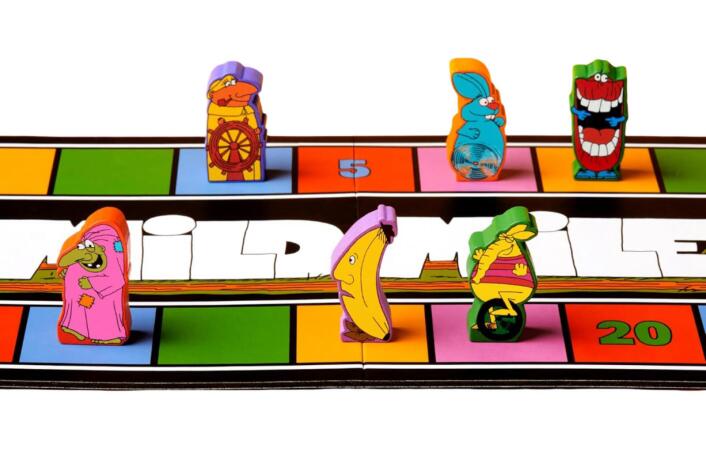
The Magical Athlete board game uses two different tracks. The Mild Mile side is a simple racetrack without any unique spaces. This plain board relies on dice rolls to decide how players move.
The Wild Wilds side adds unpredictable twists. Special spaces can push racers ahead, pull them back, or give bonus points. These elements feel similar to mechanics in old-school games but are less harsh. Players alternate between the two tracks after each race, with two races happening on Mild Mile and two more on Wild Wilds in a full game.
Mastering Character Selection and Drafting

Snake Drafting in Magical Athlete
Picking your racers shapes your strategy. Mix up the cards and show twice the number of racer cards as the number of players. The player who rolls the highest die chooses first. Picks then go clockwise until the last player grabs their first racer. After that, the order flips. The last player chooses two racers back-to-back, and the direction flips again. This continues until each player has chosen four racers from the pool of 36 unique characters.
Powerful Character Abilities
Every character bends the rules of Magical Athlete in its own way. Legs always moves five spaces per turn skipping the need to roll. M.O.U.T.H. removes any racer who ends up on the same space with just one other person. Rocket Scientist doubles its roll but stumbles after. Gunk lowers everyone else’s rolls by one. Scoocher advances a space whenever an ability activates. These abilities have different levels of power, and the game leans into this imbalance.
Character Pairings That Work Together
Combining characters leads to powerful effects. Giant Baby takes up large areas and shoves others away. Using this with M.O.U.T.H. removes opponents who end up in separated spots. Pairing Skipper with Blimp or Hare delivers major damage. Different players judge these combinations . Exploring how abilities work together during drafting gives key benefits.
The Right Time to Pick Your Best Racers
Keep your strongest characters saved to use in later races where points are more valuable. At the start of each race, players pick an available racer and reveal their choices together. This adds a rock-paper-scissors vibe to the selection process. Powerful abilities may shine in early races or work best on certain parts of the board. Holding your top racer for the last race can backfire if others predict and counter your choice .
Passive vs Active Abilities
Passive abilities work when specific situations happen. Players must decide to use active abilities. Gunk's reduction shows the power of passive abilities. Rocket Scientist's doubling shows how active abilities let players make strategic decisions. Both kinds are useful, but active abilities give players better control over when and how to use them.
Race-Specific Tactics for Maximum Points
Early Race Strategy on the Simple Board
Races on the Mild Mile side seem easier than they actually are. The first race plays out like basic roll-and-move mechanics. Board spaces don’t create obstacles, so it's smart to base your strategy on how character abilities work together instead of just focusing on positioning. Characters like Gunk, who are better , shine in this setup. Meanwhile reactive abilities come into play when opponents trigger them through their actions.

Managing the Wild Side Board Spaces
Races two and four use the Wild Wilds board. It has track spaces that can either push racers ahead, pull them back, or give bonus point tokens. These spaces make the race less predictable by adding more than just character powers. When you land on a space with bonus tokens, you earn extra victory points no matter where you finish. Movement arrows on the track can fling you forward or push you back several spaces. Take some time to look at the board design before choosing your racer for Wild Wilds races.
Using Trip Spaces and Arrows to Your Advantage
Trip spaces make you lose your next turn so plan your moves to stay clear of them when you're in the lead. If opponents ahead land on trip spaces, it opens a chance for you to pass them. Movement arrows work similar to ladders in old board games, but they aren't as harsh. On Wild Wilds, characters like Legs known for steady movement, avoid the bad effects of unlucky spaces most.
Positioning for the Finish Line
Races come down to close finishes, with spots often switching back and forth near the end. Characters such as Stickler, who need precise rolls to move ahead, can freeze everyone on the second-to-last space. Stay a space or two behind if you're racing against those characters.
Adapting to Other Players' Characters
How characters interact holds more importance than how powerful they are on their own. Effects follow a specific order. First, handle the track spaces then deal with the current player's abilities, and move clockwise to address other players’ skills. Sometimes, chain reactions set off many abilities back-to-back resulting in as many as seven or eight effects in a row.
Advanced Winning Strategies
Predicting and Countering Opponent Moves
Drafting happens in plain sight letting you see which racers everyone else picks. Pay close attention to their selections. You can spot strategic openings by remembering which racers your opponents haven’t used yet. If someone picked Legs and Romantic but hasn’t played them, they’ll save them for the last important race. To counter, use racers that mess with steady movement or make spacing harder for them.
Character Combinations That Dominate
Some pairings give massive advantages. Putting Giant Baby together with M.O.U.T.H. leads to dangerous situations. When Scoocher competes with Gunk, wins become almost guaranteed. Romantic has an unbeaten record on Wild Wilds in all seven tracked matches. Pairing Skipper with Blimp or Hare often ends with devastating results. Learn about these combos while drafting to lock them in or plan ways to counter them.
Reading the Board State
Resolving effects happens in a strict order. First, track spaces resolve. Next, the current player's abilities activate. other racers' effects resolve clockwise. Understanding this timing helps avoid mistakes and lets you take advantage of chain reactions. If the mastermind predicts the race winner , they take second place. This works if their ability activates before other effects that change positions.

When to Use Optional Abilities
Rocket Scientist doubling rolled numbers on Wild Wilds takes precise timing. If you trigger it too soon, trip spaces will penalize you. Duelist can step in after movement finishes and open duel chances before other abilities activate.
Going for Gold
You’ve got all you need to turn Magical Athlete into more than just a roll-and-move game. To succeed, focus on drafting characters and knowing the board. Timing abilities is what sets champions apart. Winning requires spotting strong combos and guessing what your opponents might pick.

Try using these strategies in your next match. Test out different character combos and adjust how you play based on each board side. Focus on improving your draft choices. Keep practicing, and you'll start winning more often.